

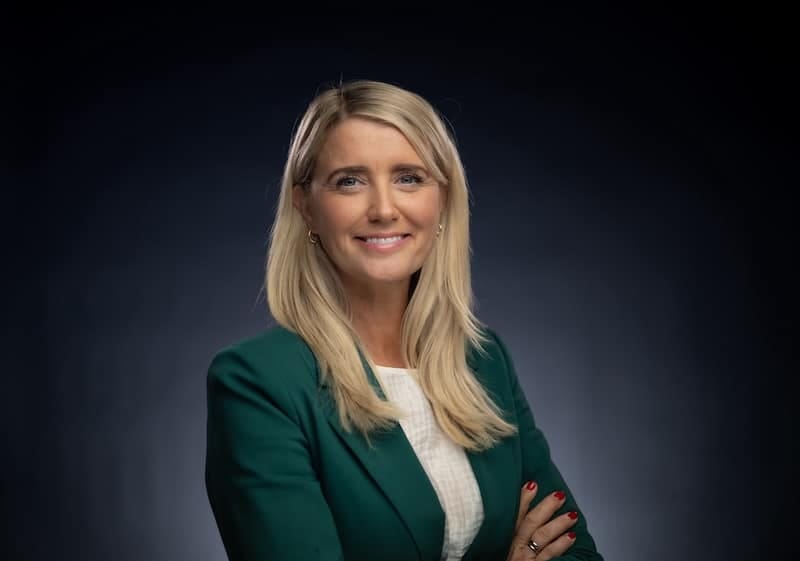
As the IHF presidential race intensifies, Norway’s newly appointed federation president Randi Gustad is stepping into a landscape far more fragile than she expected. With 126 of the IHF’s 211 member federations lacking even a basic website or social-media presence, the sport’s global silence is becoming impossible to ignore.
– Those numbers are alarming, she says to GoHandball.
With the IHF presidential election drawing closer, attempts to gather clarity from member federations have revealed a troubling pattern: silence. Dozens of national federations either declined to comment or never responded at all, despite repeated requests. One voice, however, chose openness. Norway’s handball president, Randi Gustad, agreed to speak – offering rare transparency at a moment when much of the handball world seems unwilling to do the same.
How does Norway view the upcoming presidential election?
– We are working a lot with it internally right now. I’ve been in this position for quite a short time and we have a new board, but of course there are both advantages and disadvantages to that. I don’t have any baggage from previous presidential elections. And as a leader, I function in a way where I approach things with democratic thinking and want to hear what the four candidates have to say and how they plan to take handball to a new level in terms of development, gender equality, resources, and of course human rights. That has been the approach within the Norwegian Handball Federation all along. As a lawyer by profession, I am particularly focused on regulatory aspects. I prefer not to base decisions on emotions, but rather to seek as many facts as possible before we make a dicision.
– I have attended international congresses before, but never with the IHF, so I’m looking forward to that.
Can you tell us more about your reasoning ahead of the election? Have you decided how you will vote?
– We don’t feel that we have enough information at this time to vote for a candidate. It may sound like we’re late in the process, and I can understand that, but we want to hear all the candidates’ programs first. I have had conversations with Franjo, Gerd, and Tjark. Hassan, however, I have never met and never spoken to. He is the only one I haven’t met. But I have read his program, and I see many similarities between what he and the other candidates want to further develop. Generally, the candidates use many good words, but I also want to see action plans – how everything will be put into practice with sufficient resources and staff to ensure practical follow-up, rather than relying too heavily on groups, committees, and project-based work. Such international change initiatives take time, so continuity, investments and expertise are key to achieving results
– Which candidate is most interested in developing handball and including more nations at the grassroots level? The sitting president has done a lot in that regard, and it has been good to bring handball into the school systems in countries such as Argentina, Brazil, Tunisia, and Japan. However, it is clear that it is essential to ensure more active engagement among the national federations and American and Asian continents are particularly important when it comes to growth – both in terms of sports performance and commercial opportunities
Considering that you have neither met nor spoken with Hassan Moustafa, does that mean he is behind the other candidates in Norway’s eyes?
– As a starting point, he is not in a worse position. But my position is the same as it has been with any leader who has been in the same role for almost 25 years and is of advanced age – from objective parameters, it does not send a signal of forward momentum to the handball world. Of course, I know that there is a lot of wisdom in old age as well, and it’s not about that. I believe it is healthy for all organizations to have changes in leadership. Many say it is a team effort, but in the end it is the leader who directs the team. And there must be synergy in that – that is something I am truly interested in.
Will Norway publicly announce its position before the election?
– I support transparency and strive to reflect it consistently in my actions. I will be able to say where Norway stands, but right now I don’t know. Otherwise you can ask me after the election – then I will tell you and be transparent about how Norway voted.
Do you think transparency in these matters is important, or is there a risk in stating a position openly?
– I may be naïve, but I don’t see any risks in being open. I believe that the IHF and the current leadership mean what they say when they place human rights, freedom of speech and transparency high.
Why are so many federations afraid to say who they will vote for?
– That makes me curious. I think perhaps some are afraid that there may be consequences, but I’m not entirely sure. But my basic position is that I have respect for all people, and I will listen to all the candidates. Then we will make the decision that we believe is best for international handball.
There are several candidates in this year’s election. How do you view the alternatives to Hassan Moustafa?
– Hassan represents continuity. With Gerd, the focus is more on the commercial side; he has a sort of agent’s perspective through his CV. He also has a very clear investment plan in the US where, instead of building new arenas, he wants to develop handball through basketball courts. But he was early in saying that he wanted Russia and Belarus back, and that is something we in Norway cannot accept. We have very strong solidarity with Ukraine, so bringing Russia and Belarus back is a no-go for Norway for as long as the ongoing occupation persists. But I think he has backed a bit regarding the Russia and Belarus plan.
– Franjo, I perceive as the strongest diplomatic candidate. And he has very wise thoughts about the future of handball. But all four candidates are of course skilled.
Norway is one of the top nations in world handball with strong structures and resources. How can Norway and other nations help the smaller or quiet federations to develop? Many of them don’t even have a website or any visibility at all.
– That is a very good and important question, and something we are positive about contributing to. But it must be coordinated with the IHF. I believe, to use diplomatic language, that the important thing is that everyone cooperates. France is doing good things to help African countries, for example.
– I remember the 2021 World Championship when we saw fantastic images with Iran’s women’s national team. But I’m also curious about what happens after that. How do we continue working with these smaller handball nations? That is something I will ask the candidates about. The World Championship should be the theatre of dreams, but it doesn’t help if we don’t follow up, or if we lack programs and action plans between championships to build further, recruit coaches, etc. It must be a more long-term effort than two years.
126 out of 211 member federations lack a website and/or presence on social media – what do you think about that?
– I hadn’t heard that before. But those numbers are alarming.
Given that, do you think the criteria for IHF membership should be stricter?
– That is one of the things I am most curious about. The UN says there are 195 countries in the world – perhaps that’s roughly where the limit should be? I am focused on the criteria for membership and on how development and compliance requirements are measured.
When I spoke with Philippe Bana in France, he said that France, Norway, Denmark, Sweden, and Germany had a meeting a few years ago where they decided on what to do in the coming period. They agreed on a strategy to get into the IHF Council. I know you weren’t president then, but what have you heard about that meeting?
– Where I come from, you don’t spend time on things that happened in a different reality. I know that things have happened, including terrible things with the tragic passing of Morten Stig Christensen. But we are all in electable positions. Politics is perishable, I think, but of course we are interested in collaborations to find the best solutions.
Bana says that he and France will continue on the same path and therefore also vote for Hassan. How do you view that?
– That is a clear signal from one of the major powers. I see that they place the greatest value on continuity, but I will talk to him as well to understand what he means. Norway is not yet at the point where we can go out and announce which candidate we will vote for.
READ MORE: A ranking void: Why 154 IHF member nations are missing from the world rankings – and 126 lack any digital presence
READ MORE: Bana: “France will vote for Hassan Moustafa because he is the best candidate”
READ MORE: Sweden speaks out: “Some candidates want Russia back – that’s far from our position”
READ MORE: “It Must Be Independent” – Holmqvist on IHF’s New Court of Arbitration
READ MORE: Exclusive: Tjark de Lange: “Handball deserves leaders who put the sport first, not themselves”
READ MORE: Exclusive: Franjo Bobinac: “It’s time to take handball to the next level”
READ MORE: Exclusive: ”Handball Deserves More”: Gerd Butzeck on challenging Moustafa and modernising the IHF