

The evolution of women’s club handball has produced some of the most dominant dynasties in sports history. Altering the game’s DNA completely, we list ten women’s club teams whose historic dominance redefined the boundaries of greatness.
The rise of the women’s game into a global spectacle is a testament to the immense athleticism and charisma of its biggest stars. It is a journey that spans from the highly structured Soviet era to the hyper-athletic, fast-paced modern style dominated by Scandinavia and Hungary.
Along the way, these pioneering clubs refused to treat women’s sports as an afterthought. By pairing world-class tactical systems with athletes of the highest caliber, they created untouchable sports dynasties and established the professional trends we see today.
Spartak Kiev – 1970s & 1980s
Spartak Kiev is, without qualification, the most successful club in the history of handball. Under the iron-fisted leadership of the legendary Igor Turchin, the club captured the European Cup an unbelievable 13 times. Because the roster was virtually identical to the Soviet Union national team, Spartak Kiev operated as a well-oiled machine that was fundamentally unbeatable, defining an entire era of Cold War sports dominance.
Vipers Kristiansand – Modern Era
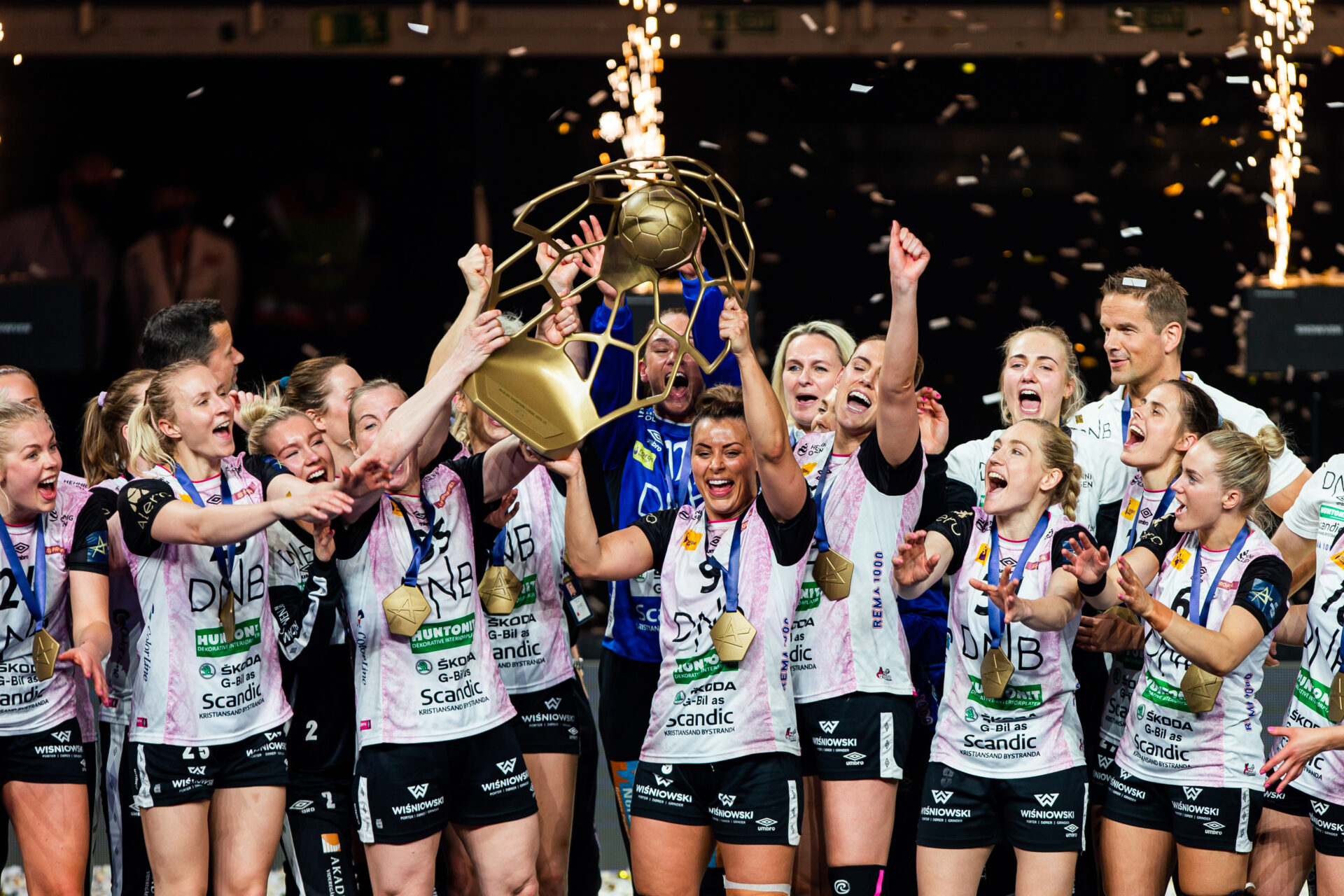
Vipers Kristiansand officially took over the European throne from Győri, storming the continent to win three consecutive Champions League titles between 2021 and 2023. Representing the pinnacle of the modern, ultra-fast game, their historic run was anchored by a deadly transition game and an unshakeable defensive foundation, marshaled by the ageless goalkeeping masterclass of Katrine Lunde.
Slagelse DT – Early 2000s
Slagelse DT was the magnificent brain-child of the colorful visionary Anja Andersen. The club went from relative obscurity to the absolute top of the world, capturing three Champions League titles in four years (2004, 2005, 2007). Slagelse was famous for introducing an extreme level of professionalism, combined with rock-star star-power and a dramatic flair that brought unprecedented media attention to the women’s game.
Viborg HK – 2000s
Viborg HK stood as Slagelse’s fierce domestic rivals, capturing the Champions League three times themselves (2006, 2009, 2010). They became the ultimate symbol of the Danish League’s “Golden Age” – an era when Denmark was the financial and competitive epicenter of the sport, and virtually every single one of the world’s best players called the Danish league home.
Győri Audi ETO KC – 2010s to present
Győri is the undisputed titan of the modern era. By creating a professional club environment second to none, the Hungarian giants captured five Champions League titles between 2013 and 2019. They fostered an unparalleled winning culture by boasting world-class players at every single position – including legends like Anita Görbicz, Eduarda Amorim, and Katrine Lunde – making them the benchmark for modern club excellence.
Krim Ljubljana – Early 2000s
Krim Ljubljana proved to the handball world that a club from a smaller nation could successfully challenge the traditional European giants. Winning the Champions League in 2001 and 2003, Krim built their success on incredibly smart, targeted international signings paired with a notoriously hostile, passionate home court atmosphere that became a graveyard for visiting favorites.
Larvik HK – 2010s
During the height of Norway’s international dominance, Larvik HK served as the powerhouse backbone of the national team. They captured the Champions League title in 2011 with a squad that personified elite physical conditioning. Larvik was globally feared for their devastating, relentless counter-attacking style, punishing every single opponent mistake within a matter of seconds.
Hypo Niederösterreich – 1980s & 1990s
Under the controversial yet visionary management of Gunnar Prokop, Hypo Niederösterreich became a European juggernaut, capturing eight Champions League titles. They were true pioneers in global sports management, actively scouting and recruiting international superstars, primarily from Eastern Europe and South America, to assemble the world’s very first multi-national club super-team.
Radnički Belgrade – 1970s & 1980s
During the height of the Cold War, Radnički Belgrade stood tall as the only club capable of consistently trading blows with the mighty Spartak Kiev. They captured the European Cup three times and the Cup Winners’ Cup three times. They did so by rejecting raw power, opting instead to charm the handball world with a technically brilliant, highly creative, and improvisational style of play.
IK Sävehof – 2000s to Present
While financial constraints have kept them from securing a Champions League title, Sävehof earns its spot on this list through a staggering display of domestic dominance. Setting a mind-boggling world record by winning 95 consecutive matches in the Swedish top flight, the club has become an internationally respected talent factory, proving that structural consistency can create a historic dynasty.