

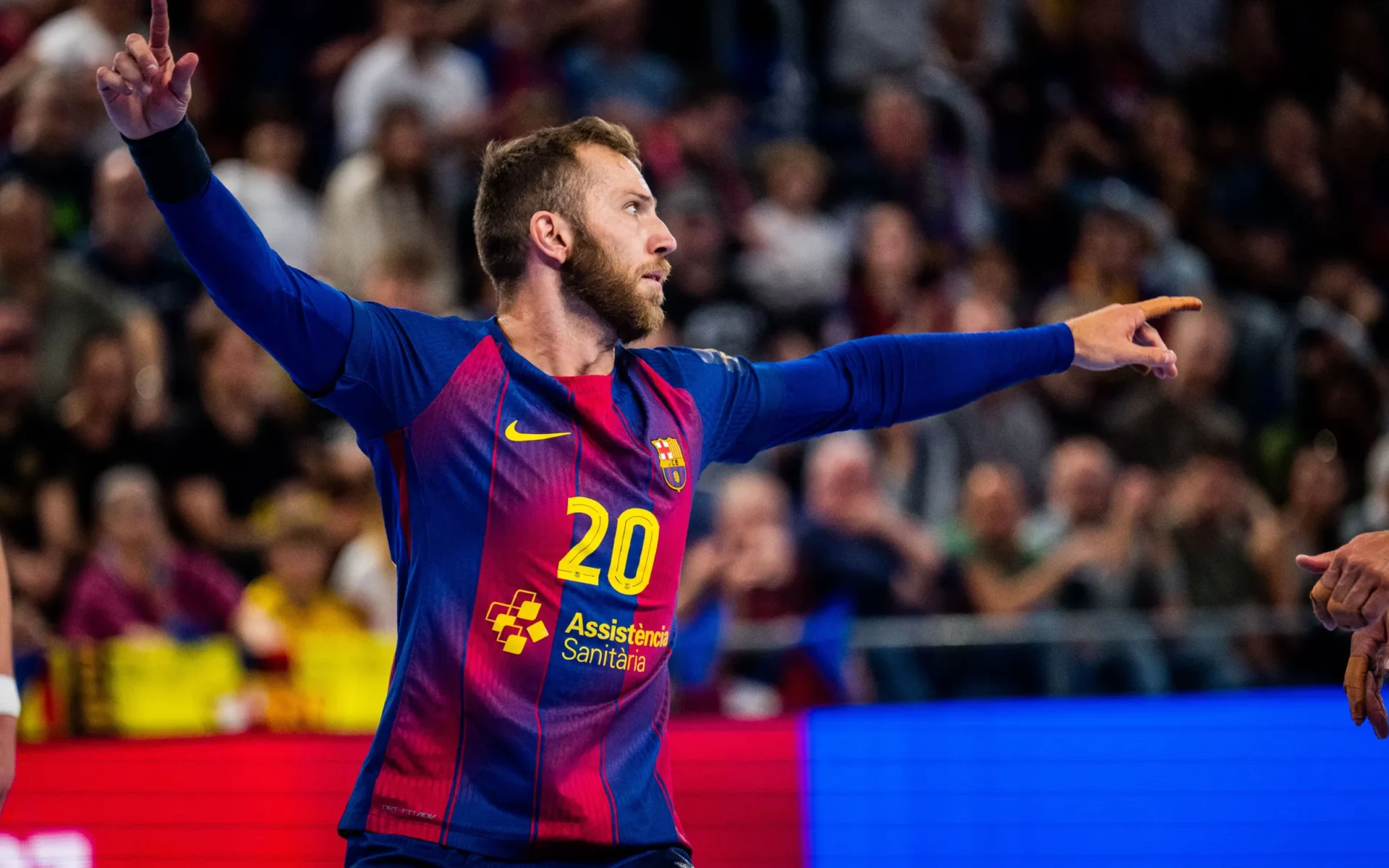
Barcelona are European champions once again. Backed by a defensive performance of the highest order, outstanding goalkeeping from Emil Nielsen, and another composed display on the biggest stage, the Spanish giants defeated Füchse Berlin 37–34 to claim their 12th EHF Champions League title. For Berlin, it was a second consecutive defeat in the final.
Much of the build-up centered around the showdown between the world’s best player, Mathias Gidsel, and arguably the world’s best goalkeeper, Emil Nielsen. By the final whistle, Barcelona had won that battle – and everything that came with it.
Berlin arrived in Cologne chasing the first Champions League trophy in club history. But just like last season, when SC Magdeburg proved too strong in the final, the German side had to settle for silver medals. After finishing runners-up in the Bundesliga, they now add another second-place finish in Europe.
Barcelona, meanwhile, once again demonstrated why they remain the most successful club in Champions League history.
The final exploded into life at a breathtaking pace. Both teams pushed relentlessly in transition, creating a spectacle for the packed Lanxess Arena crowd. Yet amid the chaos, Barcelona found the key difference: their defense.
Led by Jonathan Carlsbogård, Ludovic Fabregas, Luis Frade, and Ian Barrufet, the Catalans built a wall around Gidsel. The Danish superstar was held scoreless for nearly 25 minutes and was forced into difficult shots and rare mistakes.
When Berlin switched to seven-against-six in an attempt to create more attacking space, Barcelona punished them immediately. Aleix Gomez intercepted a Gidsel pass and scored into the empty net to make it 13–9 – a moment that perfectly summed up the first half.
At the other end, Emil Nielsen gradually won the goalkeeper duel against Dejan Milosavljev. The Danish international produced several crucial saves, helping Barcelona establish a deserved 20–16 lead at halftime. Fabregas dominated on both sides of the court, while Domen Makuc continued the impressive development that has turned him into one of Europe’s most complete playmakers this season.
Berlin fight back, but Barcelona stay in control
Berlin made a strong push after the break. Two quick goals cut the deficit to 20–18 and briefly reignited hopes of a comeback. But every time the German side threatened, Barcelona found an answer.
Nielsen delivered another series of key saves, allowing Barca to stretch the lead back to six goals at 25–19. Berlin refused to surrender, however. Milosavljev improved significantly in goal, and when Fabregas received a red card following a VAR review, the momentum briefly shifted.
With 15 minutes remaining, the score stood at 27–23 and the final was still alive.
But Barcelona never truly lost control.
Luis Frade emerged as one of the decisive figures, scoring seven goals from seven attempts and repeatedly delivering when Berlin tried to close the gap. The Spanish side remained clinical under pressure, answering every challenge with another important goal.
The decisive moment arrived when Gidsel misfired a pass that Djordje Cikusa intercepted before finishing a fast break for 36–33 with only minutes remaining. Moments later, Nielsen denied Tim Freihöfer, effectively ending Berlin’s hopes.
Barcelona eventually closed out a 37–34 victory to lift the Champions League trophy for the 12th time in club history.
In the bronze-medal match, SC Magdeburg defeated Aalborg Håndbold 32–26.
But Sunday belonged to Barcelona – and above all to a defense that achieved something very few teams can: making the world’s best player look human.