

Behind every era of handball dominance lies a club team that didn’t just win trophies, but redefined how the game was played. From Cold War giants to modern tactical machines, here are the ten men’s club teams that set the absolute gold standard for greatness.
While international tournaments capture the world’s attention for a few weeks a year, it is in the day-to-day grind of club handball where true tactical revolutions are born. Building a legendary club team requires a perfect storm: visionary coaching, financial backing, and a locker room full of superstar personalities.
To reach historic heights, these teams needed a rare level of synergy where individual egos were sacrificed for a collective system. The clubs on this list achieved exactly that, transforming their respective eras and leaving a legacy that coaches still study to this day.
FC Barcelona – 1990s: “The dream team”
Under the legendary guidance of Valero Rivera, this squad earned the moniker “The Dream Team” for a very simple reason: they were practically unbeatable. Barcelona conquered Europe by winning an astonishing five consecutive Champions League titles between 1996 and 2000.
Powered by iconic stars like Enric Masip and Iñaki Urdangarin, this team set an unprecedented standard for professional club handball, blending tactical perfection with a winning culture that had never been witnessed before in the sport.
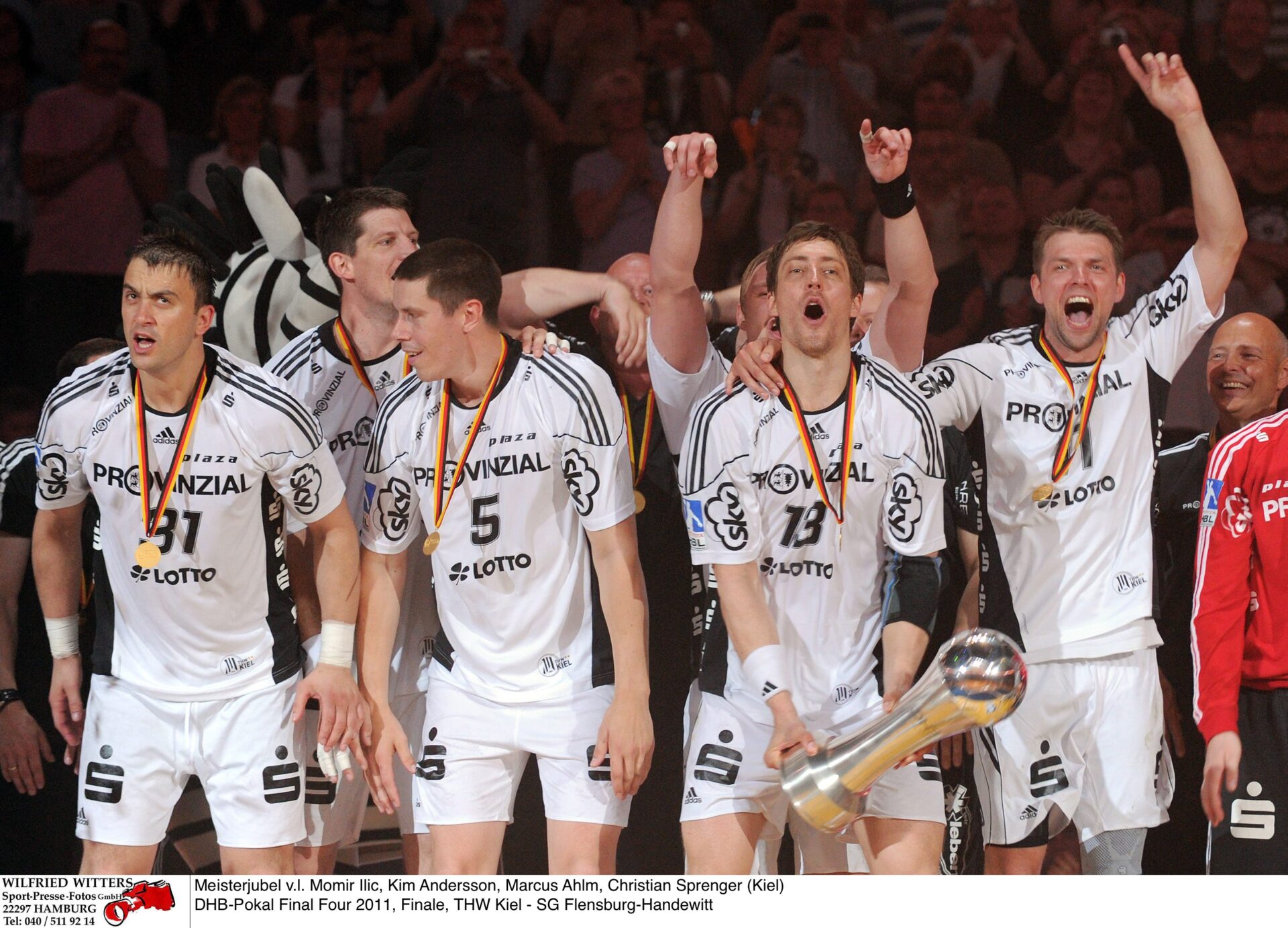
THW Kiel – 2011/2012: “The untouchables”
The 2011/2012 season of THW Kiel belongs in the realm of sports mythology. “Die Unschlagbaren” (The Untouchables) put together the perfect domestic campaign, winning the cutthroat German Bundesliga by securing a flawless 68 out of 68 possible points.
Led by a roster of athletic titans, they captured the historic “Treble” – the League, the Cup, and the Champions League – and are widely considered by purists to be the most physically complete and relentless team ever assembled.
VfL Gummersbach – 1960s & 1970s
A true titan during handball’s early golden age, VfL Gummersbach was the blueprint for European excellence. They dominated the Champions League precursor, the European Cup, winning the prestigious trophy five times between 1967 and 1974.
More than just a club team, Gummersbach served as the absolute backbone of the German national team, establishing a tactical discipline and culture of physical excellence that defined a generation.
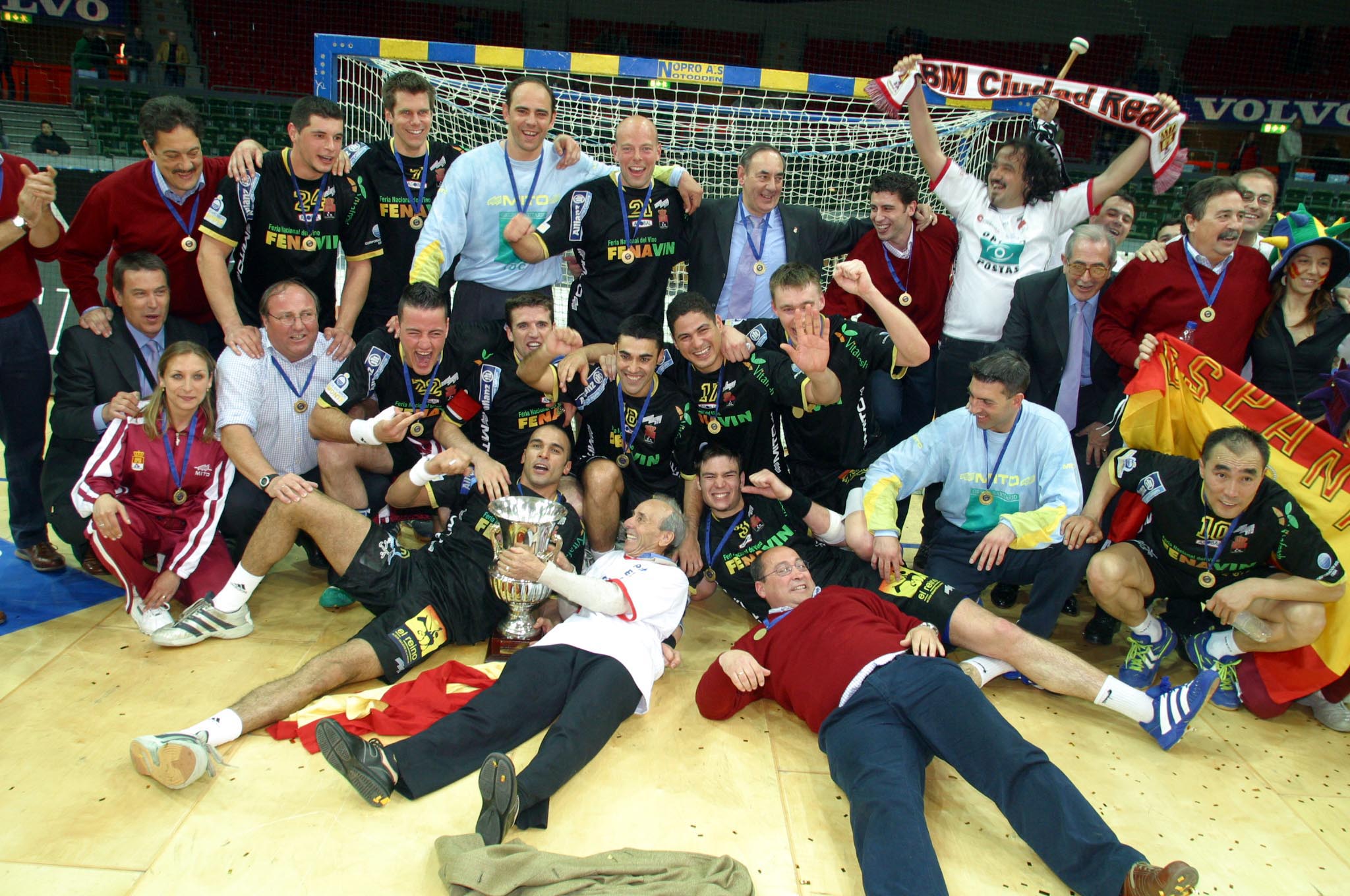
BM Ciudad Real – 2000s: “The Galacticos”
As FC Barcelona’s fierce domestic and European rivals during the 2000s, Ciudad Real built an era-defining powerhouse often referred to as handball’s “Galacticos.”
Backed by a roster of global superstars including Olafur Stefansson and Luc Abalo, they captured three Champions League titles in a span of five years. Their contribution to history was their style; they drastically pushed up the tempo of world handball, introducing a breathless transitional game.
© Bildbyrån
Montpellier HB – Early 2000s
Before Montpellier burst onto the scene, French club handball was largely an afterthought on the European stage. That changed completely in 2003 when this tightly knit squad lifted the Champions League trophy, spearheaded by a brilliant, teenage Nikola Karabatic. This historic triumph didn’t just put Montpellier on the map; it laid the structural and mental foundations for the absolute global dominance that French handball enjoys today.
SKA Minsk – 1980s
Coached by the master tactician Spartak Mironovich, SKA Minsk was a breathtaking anomaly during an era heavily dominated by rigid Eastern Bloc systems. Minsk played an incredibly fast, fluid, and highly technical brand of handball that left opponents chasing shadows. Their revolutionary fast-break style propelled them to three European Cup titles during a decade where they stood out as the most entertaining team in the world.
Dukla Prague – 1950s & 1960s
To understand the roots of modern handball tactics, one must look at Dukla Prague. As one of the original giants of the sport, they won the inaugural European Cup in 1957. Dukla Prague became world-renowned for their immaculate tactical discipline, defensive synchronization, and technical skill, proving to the early handball world that structure and strategy were the keys to conquering Europe.
SC Magdeburg – Modern Era
In the modern landscape, SC Magdeburg has completely revolutionized offensive handball. Eschewing the traditional reliance on towering backcourt shooters, they have perfected a system built on extreme pace, short-passing sequences, and unmatched one-on-one breakthrough power. Their hyper-efficient, lightning-fast style has successfully broken the long-standing European dominance of giants like Kiel and Barcelona.
RK Zagreb – Early 1990s
Against the harrowing backdrop of the Croatian War of Independence, RK Zagreb achieved the unthinkable. Fueled by fierce national pride, the club managed to win back-to-back Champions League titles in 1992 and 1993. This golden generation of players forged an unshakeable team spirit in Zagreb that they would later carry into the Croatian national team, dominating world handball throughout the decade.
Redbergslids IK – Late 1990s
While financial disparities meant they never lifted the Champions League trophy, “RIK” was an undeniable powerhouse in European competition and utterly dominated the Swedish league. Playing a unique brand of “total handball” characterized by seamless positional fluidity and tactical cleverness, they became an elite academy, producing world-class players for Sweden’s legendary “Bengan Boys” national team on a conveyor belt.