

The EHF Champions League is entering its most unforgiving phase. The play-offs begin on April 1, and while some teams have built momentum over months, others are only just finding their rhythm.
Here’s how the contenders stack up right now:
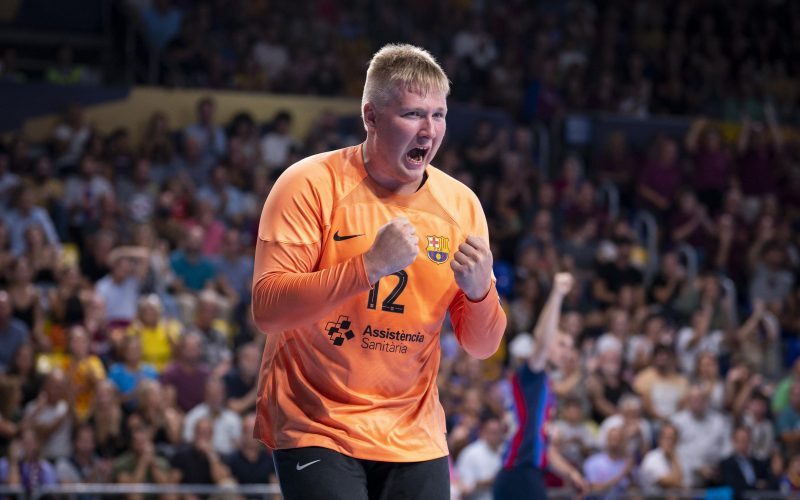
1. Barça (13-1)

Photo: Victor Salgado, FC Barcelona
There’s no real debate at the top.
Barça have been the most complete team in the competition from start to finish. Their only loss came early in the season at home against Magdeburg (21–22), and since then they’ve looked close to untouchable.
They’ve scored more goals than anyone else – but perhaps the most telling stat is that their top scorer, Aleix Gómez, is only seventh in the overall scoring charts. That says everything about their depth.
Emil Nielsen, Ludovic Fàbregas, Dika Mem, Blaz Janc and the rest of Carlos Ortega’s machine all contribute in different ways. There are no weak links here, just solutions.
2. SC Magdeburg (11-1-2)

Magdeburg opened the campaign with eleven straight wins and have remained one of the most structurally sound teams throughout.
A draw away to Plock and losses to Barça and PSG are the only blemishes, but this is still a team that knows exactly who they are.
Felix Claar, Gisli Kristjansson and Omar Ingi Magnusson drive the attack, while Magnus Saugstrup and Oscar Bergendahl anchor a physically imposing defense. Behind them, Sergey Hernandez has been excellent in goal.
And then there’s Bennet Wiegert, arguably one of the best coaches in Europe, making sure everything fits.
3. Füchse Berlin (11-3)

Photo: Anze Malovrh / kolektiff
For some time, Berlin looked like a clear number one.
Eleven straight wins set the tone, and even though they stumbled late with home losses to Kielce and Nantes, the group was already under control.
Mathias Gidsel is the headline act, 120 goals, leading the scoring charts by a comfortable margin, but this is far from a one-man show.
Dejan Milosavljev, Lasse Andersson, Nils Lichtlein and Tobias Gröndahl all play their part in a team that thrives on tempo and attacking flow.
At their best, they might be the most entertaining team in Europe.
4. Aalborg Håndbold (10-1-3)
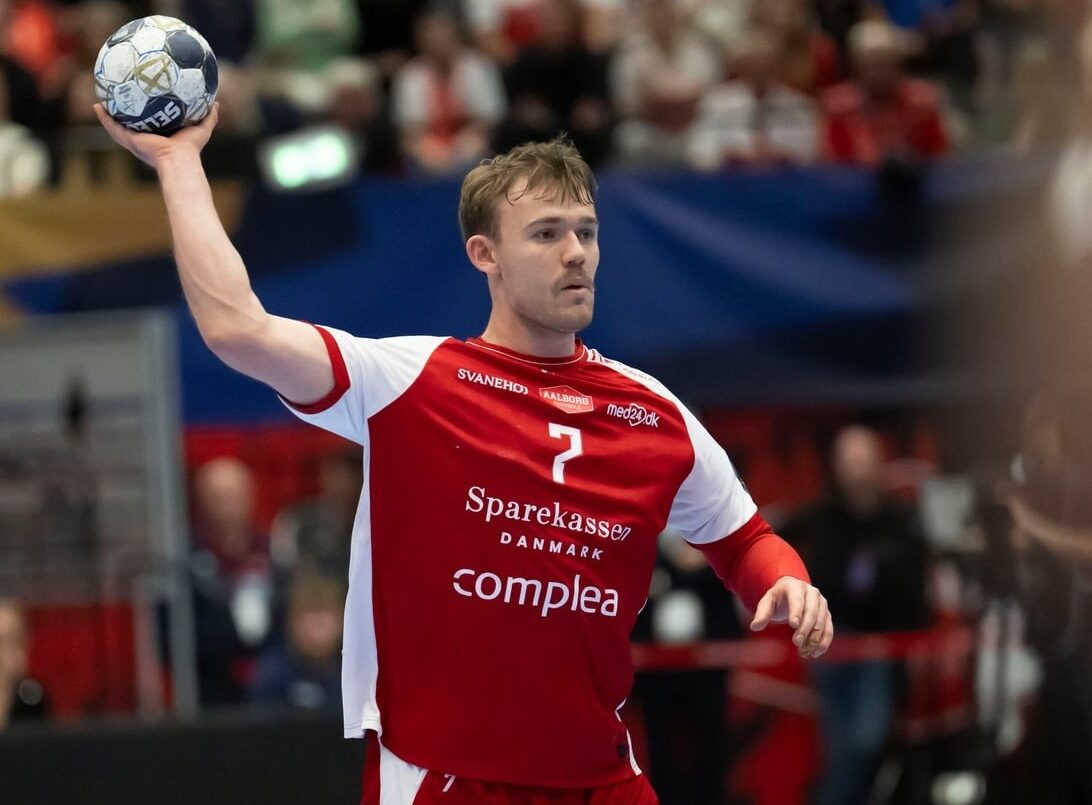
Photo: Aalborg Håndbold
Clearly the second-best team in their group, and often closer to the top than the table suggests.
Losses home and away to Berlin and away to Sporting stand out, but Aalborg also took strong results: double wins over Nantes and three points from Kielce.
Thomas Arnoldsen leads the scoring (76 goals), but this is a well-balanced side. Niklas Landin remains a game-changer in goal, while Juri Knorr and Mads Hoxer add creativity and firepower.
Simon Dahl continues to impress as head coach. Aalborg are stable, dangerous, and very hard to eliminate.
5. Industria Kielce (8-1-5)

Photo: Anders Bjurö / BILDBYRÅN
A tale of two halves.
Kielce started with four losses in their first five games but then found their rhythm, winning seven of the next nine. The only dropped points in that stretch came late against Aalborg and away in Aalborg again.
They now face Pick Szeged in the play-offs.
Alex Dujshebaev, Szymon Sićko and Artsem Karalek lead the charge, while Aleks Vlah has slotted in seamlessly. There’s also an emotional layer, this is the last ride for both Alex and Daniel Dujshebaev before their departure.
Momentum matters. Kielce have it.
6. Orlen Wisła Plock (8-2-4)

One of the most cohesive teams in the competition.
Plock’s losses have come against Barça (twice) and Magdeburg, no shame there. The only real misstep was the home defeat to GOG.
Otherwise, this is a team that has beaten PSG both home and away and consistently delivered.
Melvyn Richardson, fourth in the scoring charts, is the standout name, but the real strength lies in the collective. Xavier Sabaté has built a true team – disciplined, structured and hard to break down.
They meet Sporting in the play-offs.
7. HBC Nantes (8-6)

Photo: HBC Nantes
More inconsistent than we’re used to, but still dangerous.
Losses at home to Berlin and Aalborg, plus a surprise defeat away to Dinamo Bucuresti, show their volatility. But the highs are undeniable: wins away to Sporting, Kielce and Berlin, plus a home victory over Veszprém.
The backbone is their backcourt trio: Julien Bos, Thibaud Briet (having a standout season) and Aymeric Minne. Add Noam Leopold, arguably the hottest left wing in Europe right now, and Nantes always have firepower.
They face GOG in the play-offs, a tricky matchup.
8. Paris Saint-Germain (6-1-7)

Photo (archive): Emma Wallskog / BILDBYRÅN
A season split in two.
PSG went 3–7 in their first ten matches, far below expectations. But they’ve turned it around, finishing the group stage without another loss and showing significant defensive improvement.
Elohim Prandi (second in the scoring charts) and Yahia Omar (sixth) provide the goals, while Kamil Syprzak remains a constant threat on the line. Luc Steins orchestrates the attack.
They now face Veszprém, a clash between two unpredictable giants.
9. One Veszprém (7-7)

Photo: Telekom Veszprém.
Few teams are harder to read.
Veszprém have scored the second-most goals in the competition, yet they’ve looked disjointed at times. The highs are elite; the lows are concerning.
Mikael Appelgren has been solid in goal, Hugo Descat reliable on the wing, while Ahmed Hesham and Ivan Martinovic provide firepower. Nedim Remili, on his day, is still world-class.
But with this squad, expectations are higher. Xavi Pascual’s team should be more consistent.
PSG await.
10. Sporting CP (7-7)

Photo: Mathias Bergeld / BILDBYRÅN
A bit like Veszprém, only with different expectations.
Sporting scraped through as the last team in their group, yet still finished comfortably ahead of the chasing pack. They’ve shown they can beat strong sides: Kielce, Veszprém and Aalborg all fell in Lisbon.
The Costa brothers are the engine, Kiko Costa (fifth in scoring) and his brother Martim driving the offense, supported by Salvador Salvador and Orri Freyr Þorkelsson.
They face Plock in the play-offs.
11. GOG (6-1-7)

A nightmare opponent, on the right day.
GOG’s quick, creative style can dismantle anyone. Wins away to PSG, Plock and Szeged prove their ceiling is high.
But inconsistency has defined their campaign.
Frederik Bjerre (third in scoring) leads the way, supported by Hjalte Lykke and Óli Mittún. When it clicks, it’s electric. When it doesn’t, it falls apart quickly.
Nantes await.
12. Pick Szeged (5-1-8)

Photo: Ludvig Thunman / BILDBYRÅN
A difficult season.
Szeged started reasonably well but faded badly, with losses to Pelister and GOG highlighting deeper issues.
Goalkeeping has been inconsistent, and the team often looks too heavy and predictable in attack.
Mario Sostaric has been the standout performer, and arguably the only one consistently at the highest level.
They face Kielce in the play-offs and will need a significant step up to compete.