

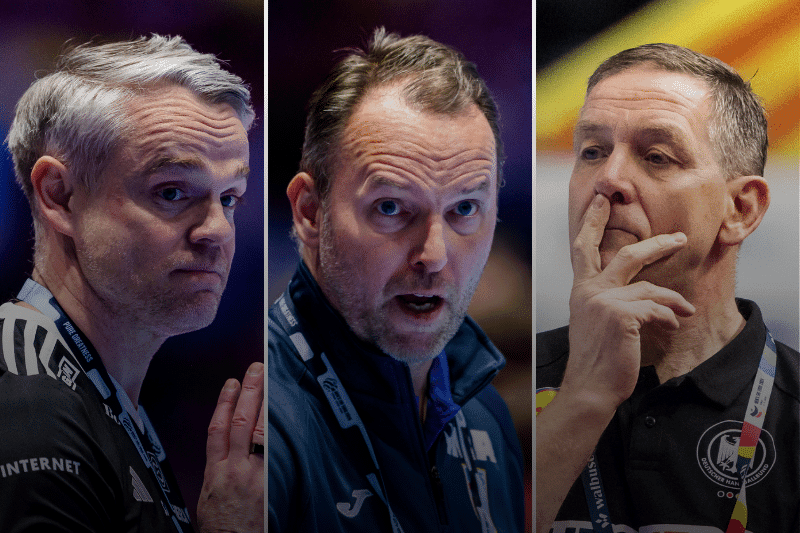
At the 2026 Men’s EHF EURO, a remarkable coaching story is unfolding: three of the four semifinalists are helmed by Icelandic head coaches – Snorri Steinn Guðjónsson (Iceland), Alfreð Gíslason (Germany) and Dagur Sigurðsson (Croatia).
In a sport where tactical nuance and leadership matter as much as player talent, Iceland’s outsized influence from the bench underscores the depth of coaching pedigree the nation has developed over decades.
“It’s no secret that they have a really good handball culture… and have developed both many skilled players and coaches,” said Nikolaj Jacobsen, head coach of Denmark, during Thursday’s press conference.
Despite Iceland’s small population, its handball coaching tree has spread far across Europe. Snorri Steinn Guðjónsson, a former national team playmaker with 257 caps, took over Iceland’s team in 2023 and guided them into the Euro semis this year with a blend of disciplined structure and spirited attack. His understanding of Icelandic handball DNA, together with tactical adaptability, has been central to Iceland’s strong tournament run.
Gíslason – brought life back into the German side
Alfreð Gíslason, one of Iceland’s coaching greats, leads Germany. With a storied club career marked by multiple Bundesliga and Champions League successes and international experience, Gislason has instilled resilience and tactical balance in a German side now ready for the final weekend. His calm leadership was evident in post-match reflections on Germany’s big wins this tournament.
Then there’s Dagur Sigurðsson, whose globe-spanning coaching journey, from winning the EHF EURO 2016 with Germany to leading Japan and now Croatia, reflects Iceland’s far-reaching handball influence. Appointed Croatia head coach in 2024, he guided them to the 2025 World Championship final and now deep into Euros. Known for bold tactics and passionate leadership, Sigurðsson made headlines yesterday with outspoken criticism of the EHF, a sign of his fierce commitment to his players’ welfare and competitive readiness.
In a year where coaching acumen could decide medals, the Icelandic presence in the final four highlights a broader “coaching miracle”, a testament to a nation that, despite its modest size, consistently produces thinkers capable of shaping the game at the highest level.