

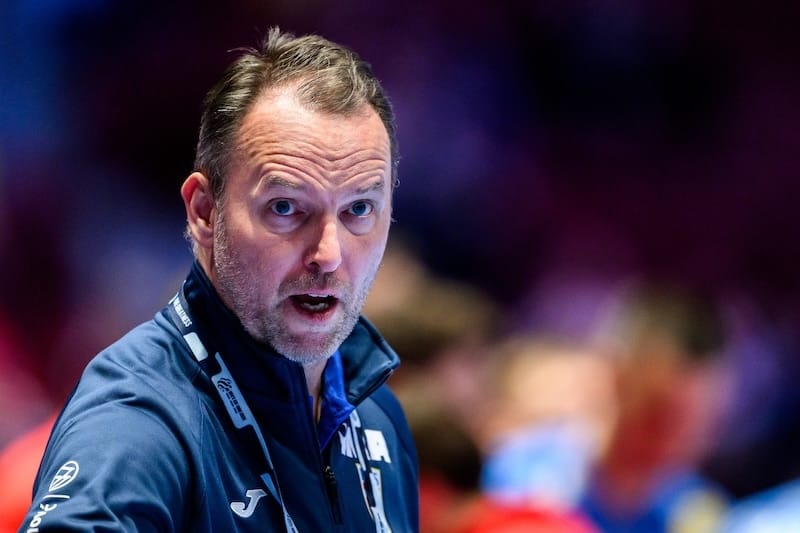
Dagur Sigurdsson was angry. Really angry.
And honestly? I liked it.
Yes, it’s obvious that Sigurdsson knew the conditions long before the Euros even started. He knew the travel schedule, the rest days, the group setup. The feeling in the press room was that this attack had been brewing since yesterday, maybe even longer. This was not a spontaneous outburst.
But that doesn’t make it wrong.
On the contrary. It made it necessary.
Because what Sigurdsson did was say out loud what many coaches, players and staff members have been thinking, and complaining about quietly (and sometimes not so quietly) for years. Championship scheduling, whether organised by the EHF or the IHF, is rarely good. Not for the players. Not for the coaches. Not for the teams.
But it often seems to work perfectly fine for the organisers.
Sigurdsson called the EHF a fast-food company. He called them an event company. And that hit uncomfortably close to home.
Built around everything except optimal sporting conditions
Because modern championships increasingly feel like they are built around everything except optimal sporting conditions. Travel-heavy schedules, uneven rest days, mandatory media obligations placed right in the middle of what should be recovery and preparation time. All wrapped up in glossy branding, slogans like “Pure Greatness” and carefully produced entertainment.
From the EHF’s perspective, it probably looks great. Full arenas. Packed TV schedules. Commercial partners satisfied. Money flowing.
From the teams’ perspective? Not so much.
When Sigurdsson talked about being put “on a bus like frozen chickens” after playing two matches within 22 hours, it sounded dramatic, but not exaggerated. When he questioned how a semi-finalist could be forced to spend its only rest day travelling and attending mandatory press conferences, it was hard to argue against him.
None of the points he raised were unreasonable. Not one.
Of course, tournament planning is complicated. Of course, someone will always be unhappy. Of course, compromises must be made. But when those compromises consistently seem to favour logistics, TV windows and show production over sporting fairness, then criticism is not only fair, it’s healthy.
And let’s be honest: handball needs moments like this.
Not because anger is good in itself, but because it cuts through the polite, predictable noise that so often surrounds major championships. We get hundreds of press conferences where nothing happens. Where everyone says the right things. Where no one wants to rock the boat.
Then suddenly, someone does.
Protecting the players
Sigurdsson did not talk about defensive formations or fast breaks. He talked about rest, travel, recovery and respect for players. He challenged the idea that putting on “a nice show” is enough. He questioned whether “Pure Greatness” means anything if the foundation underneath is cracked.
That’s why this mattered.
The EHF is powerful. And powerful organisations rarely like being challenged publicly. Which is exactly why they sometimes need to be.
Will this change anything? Probably not.
Will future championships suddenly be perfectly scheduled? Unlikely.
But this press conference will be remembered.
Not because of what it solved, but because of what it exposed.
This was not just a rant.
It was a reminder.
And years from now, when people talk about classic press conferences at major handball tournaments, I’m pretty sure this one will be on the list.